December 2025
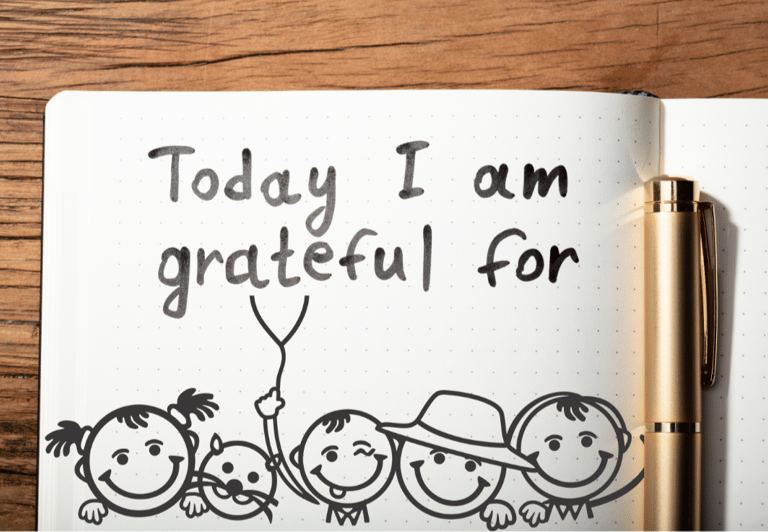
What children can learn about gratitude before age 7
In the first years of my child’s life, I did something that most parents of my generation probably did: I bought dozens of kilos of toys and gadgets, driven by a more or less conscious desire to give my child everything I never had growing up.
All my own childhood lacks seemed to be magically resolved through impulsive purchases, made with almost obsessive care.
I vividly remember the Christmas when my daughter was just over one year old. Under the tree, there was a dozen wooden toy sets, each promising to develop multiple motor and cognitive skills, surely transforming her overnight into a little Einstein. Reality, of course, was very different. She was nowhere near as excited as I was. My surprise was even greater when I realized that a child that age is far more fascinated by a pair of kitchen pots than by an impressive pile of fancy, painfully expensive toys.
Time passed, yet I continued to accumulate toys and objects I believed my child absolutely needed. Sometimes, I even anticipated her wishes, not leaving her the space to experience that burning desire we all feel at some point in our lives. It didn’t take long for reality to teach me something I didn’t yet know: it is not about offering everything, without limits.
Mountains of toys bring children joy and comfort only for a moment. Love, presence, family warmth, kindness, patience — these are the priceless, irreplaceable gifts our children truly need.
Of course, let’s not be hypocritical: gifts and toys, when chosen with intention, do bring magic into children’s hearts. And I deeply believe there should be no child in this world who doesn’t get to experience that magic.
What I want to talk about today is how we can limit waste and pollution caused by excessive consumption in a society built, unfortunately, far too much around buying and owning — and how we can teach our children to feel grateful with less. At the same time, balance and moderation in gift-giving help children value what they already have and understand that not everything is owed to them, and that sometimes it is enough to be content with what is already present in their lives.
Once I became aware of the trap I had fallen into, I immediately reduced the number of toys I bought, set clear rules that I strictly followed when shopping together, and introduced the concept of a piggy bank: if she wants a toy and cannot wait for Santa or the Easter Bunny to bring it, she needs to buy it with her own money.
Gratitude is not a concept. It is a lived experience.
Before the age of seven, children do not understand gratitude as an abstract value. They do not wake up one morning feeling thankful for life, comfort, or stability. Gratitude, for them, is deeply sensory and relational. It lives in moments, not in lessons.
During the winter holidays, we are often tempted to teach gratitude by explaining it, correcting behavior, or reminding children how lucky they are. But gratitude cannot be forced into existence through words alone. It is absorbed through repeated emotional experiences that say: I am safe. I have enough. I belong.
Children under seven live primarily in the present moment. Their brains are still developing the capacity for comparison, abstraction, and long-term perspective. When we expect them to feel grateful in the same way adults do, we set both them — and ourselves — up for frustration.
For a young child:
Gratitude is not saying “thank you” on command.
Gratitude is not suppressing disappointment.
Gratitude is not understanding scarcity or privilege.
Instead, gratitude shows up as:
contentment,
ease,
the ability to enjoy what is already there,
the willingness to share,
and the capacity to pause before wanting more.
These are skills that take years to grow, and they grow best in an environment of emotional safety.
The hidden cost of over-gifting
During the holidays, excess is often disguised as generosity. We buy more than we planned, more than our children asked for, more than they can realistically process. And while our intentions are loving, the outcome is often the opposite of what we hope for.
Over-gifting can lead to:
overstimulation,
difficulty focusing,
reduced appreciation,
and a constant search for the next new thing.
When everything is special, nothing truly is.
Children surrounded by too many toys often struggle to value any of them deeply. The joy becomes fleeting, and the desire for more appears quickly — not because they are ungrateful, but because their nervous system is overwhelmed.
Teaching gratitude by slowing down
One of the most powerful ways to nurture gratitude is by slowing down the rhythm of the holidays.
Instead of:
rushing from store to store,
filling every free moment with activities,
or creating packed schedules,
we can intentionally leave space for boredom, connection, and simplicity.
Ask questions like:
“What was your favorite moment today?”
“What made you feel cozy?”
“Who did you enjoy spending time with?”
These questions gently guide children to notice and name what already feels good in their lives.
Gratitude grows when children are allowed to want
One of the biggest lessons I learned was this: children need to want things.
When we anticipate every desire, we rob them of the experience of longing, waiting, and eventually appreciating. Wanting is not a flaw — it is a necessary emotional process.
When a child saves money for a toy:
they learn patience,
they learn value,
and they learn that effort and reward are connected.
Gratitude is not about having less. It is about understanding what it takes to have something at all.
The role of boundaries in gratitude
Clear boundaries create safety. Safety creates gratitude.
When children know:
how many gifts to expect,
when gifts are given,
and that “no” is a stable answer,
they stop negotiating for more and begin settling into what is.
Boundaries reduce anxiety. And an un-anxious child is far more capable of feeling content.
Modeling gratitude instead of demanding it
Children learn gratitude by watching us.
They notice:
how we talk about what we lack,
how often we complain,
how we treat service workers,
how we speak about money and possessions.
When we say things like:
“I’m so tired of this house,”
“We never have enough,”
“This isn’t good enough,”
we teach dissatisfaction — even if we ask children to be grateful.
Gratitude grows when children hear us say:
“This is enough for today.”
“I’m thankful we are together.”
“I appreciate this moment.”
Simple holiday rituals that nurture gratitude
Rituals ground children. They create predictability, meaning, and emotional memory. Check out on my blog what I’ve written about traditions and simple ideas to implement them, here.
Some simple ideas:
The gratitude ornament
A memory photo in the same place
baking a single family recipe each year,
donating toys together,
writing or drawing thank-you notes.
These rituals send a powerful message: what matters most cannot be bought.
Gratitude and generosity go hand in hand
Children learn gratitude most deeply when they experience themselves as capable of giving.
This does not require grand gestures. It requires participation.
Letting a child:
choose a toy to donate,
help prepare a gift,
make a card for someone else,
builds the understanding that they already have enough to share.
How to teach gratitude to young children
Telling children how lucky they are often backfires.
Guilt does not create gratitude. It may create confusion, shame, and emotional distance.
Instead of:
“Others have less than you,”
try:
“We take care of what we have.”
“We help when we can.”
“We appreciate what feels good to us.”
What children remember long after the holidays
Years from now, children will not remember:
how many gifts they received,
or how expensive they were.
They will remember:
how safe they felt,
how connected they were,
how seen and loved they felt.
Gratitude, before the age of seven, is not taught. It is lived. By us, in the first place.
Warm Regards,
The Red Fairy
LEAVE A REPLY
What children can learn about gratitude before age 7
Discover how to raise grateful children before age 7 by limiting excess, choosing meaningful gifts, and focusing on presence during the holidays. What children can learn about gratitude before age 7: a holiday reflection on less, presence, and meaning