December 2025
30 Christmas Gifts That Help Children Build Self-Confidence
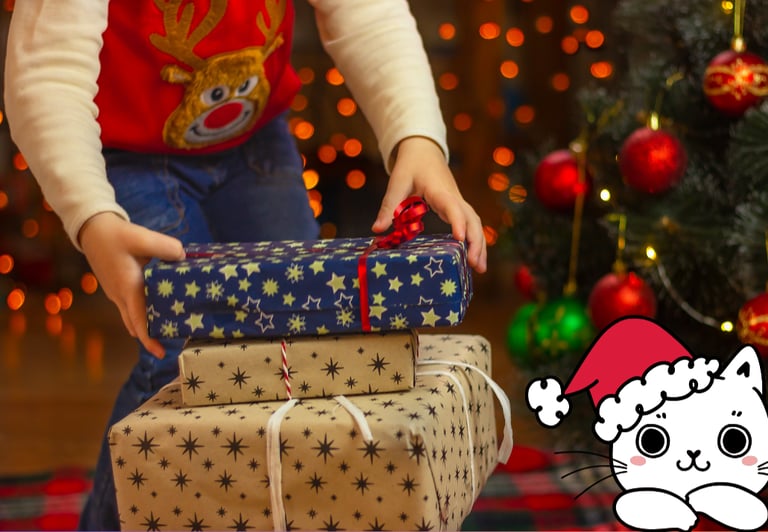
In December, many parents ask the same question: What should I buy my child this year?
Behind it often hides a deeper worry—Am I giving them enough? Am I doing this right?
This is exactly what I have been thinking about in the last days (or even weeks?!) as all the stores try, in a very aggressive way, to make you buy everything they have in terms of toys—and some of them are veeeeery expensive! Poor parents…
I have realized that the world we are living in is full of noisy toys and flashy ads, and gift-giving can quietly turn into pressure. There is an abundance of everything, yet we are lacking in quality. Still, every parent carries the same intense desire: we want our children to be happy. We want to see their eyes light up. We want to give them something memorable.
But what if the most valuable gifts are not the loudest, trendiest, or most expensive ones?
What if the gifts that truly matter are the ones that whisper a simple but powerful message: “You are worthy. I believe in you.”
This December, I have decided to resist the consumeristic attitude that society so desperately wants us to adopt. Instead, I will choose to buy consciously—meaningful gifts.
I want my daughter to grow up with strong self-worth, and I know very well that it doesn’t come from praise alone. It grows slowly, through experiences that tell a child:
I am capable.
My thoughts and feelings matter.
I am allowed to try, fail, and try again.
I am loved for who I am, not for what I achieve.
The gifts we choose can support this process—or unintentionally undermine it.
This article is not a list of “must-buy toys.”
It is an invitation to see gifts as emotional tools—small opportunities to nurture confidence, autonomy, and inner strength.
What Self-Confidence Really Is
Before we talk about gifts, it helps to clarify what self-confidence actually means for a child.
Self-confidence is not loudness. It’s not perfection. It’s not constant happiness or fearlessness. Actually true self-confidence looks quieter than we expect.
It looks like:
a child who tries even when unsure,
a child who can say “I don’t know yet” without shame,
a child who feels safe expressing emotions,
a child who believes mistakes don’t make them unlovable.
Confidence grows when children feel safe to be themselves.
And safety is built through repeated experiences of autonomy, validation, connection, and gentle challenge.
The gifts below are grouped into six categories, each supporting a key pillar of healthy self-confidence.
Gifts That Support Autonomy
Because confidence begins with “I can do it myself.”
When children are trusted with age-appropriate independence, they begin to see themselves as capable human beings.
1. Montessori-Inspired Activity Sets
Simple tools for cutting, sorting, pouring, or assembling help children practice real skills. The message is: Your hands matter. You can learn.
2. Progressive Puzzles
Puzzles that increase in difficulty allow children to experience effort and growth without pressure. They learn that competence develops over time.
3. Building Toys (Blocks, Magnetic Tiles, Lego)
These open-ended toys encourage experimentation, problem-solving, and persistence—all essential for confidence.
4. A Personal Art Kit
Real materials (colored pencils, paint, brushes) instead of “toy” versions send the message: Your creativity deserves respect.
5. DIY or Craft Kits
Following steps, making choices, and finishing a project independently strengthens self-trust.
Why it matters:
Autonomy teaches children that they are not helpless spectators of life—they are participants.
Gifts That Encourage Self-Expression
Because confident children believe their voice matters.
Many children struggle with expressing thoughts and emotions—not because they lack them, but because they lack safe outlets.
6. A Child’s Journal or Drawing Notebook
Whether through words or pictures, a journal offers private space where expression comes without judgment.
7. Story-Creation Card Sets
Cards with characters, emotions, and settings invite imagination and emotional literacy.
8. A Toy Microphone or Karaoke Set
Not for performance—but for play. Children explore voice, presence, and expression.
9. Dress-Up and Role-Play Costumes
Pretending allows children to try on different identities safely. Confidence grows through imaginative exploration.
10. Diverse Figurines
Figurines that represent different emotions, bodies, families, and professions teach children that many ways of being exist—and all are valid.
Why it matters:
Children who feel heard internally grow up less afraid to speak externally.
Gifts That Build a Sense of Competence
Because confidence grows when effort leads to mastery.
Competence is not about being “smart.” It’s about seeing ourselves improve through practice.
11. Logic and Thinking Games
Age-appropriate logic games encourage problem-solving without evaluation.
12. Simple STEM Kits
Hands-on experiments allow curiosity without the pressure of “right answers.”
13. Strategy Games for Kids
These develop planning, patience, and the ability to handle loss without shame.
14. Memory Games
They strengthen focus while offering visible progress—children see improvement.
15. Interactive Books
Books that require participation (searching, deciding, solving) reinforce active engagement instead of passive consumption.
Why it matters:
Confidence is built when children learn: I can learn things I don’t yet know.
Gifts That Strengthen Connection
Because self-confidence is rooted in feeling emotionally safe.
No child becomes confident alone. Confidence grows inside relationships where a child feels seen and valued.
Spoiler: this is my favorite category! I written here on the blog how hard is for me to play but there is one exception, I love board games and I truly like to spend time playing them together.
16. Family Board Games
Shared laughter and cooperation matter more than winning.
17. Cooperative Games
Games where players work together rather than compete teach mutual support.
18. Parent–Child Activity Sets
Baking kits, craft kits, or shared journals emphasize togetherness.
19. Emotion-Based Conversation Games
Cards with gentle questions help children articulate inner experiences.
20. Books About Friendship and Empathy
Stories allow children to recognize themselves and feel less alone.
Why it matters:
Children who feel connected are less dependent on external validation later in life.
Gifts That Validate Emotions
Because confidence includes emotional safety.
Children often learn—explicitly or subtly—that some emotions are “too much.” This damages self-trust.
21. Emotion-Themed Picture Books
Books about fear, anger, sadness normalize emotional complexity.
22. Emotion Card Decks
Naming feelings builds emotional intelligence and inner clarity.
23. Sensory Tools
Stress balls, slime, or soft objects help regulate overwhelmed nervous systems.
24. Dolls or Toys With Emotional Faces
They allow children to project and process emotions through play.
25. Child-Friendly Mindfulness Kits
Breathing exercises or calming rituals teach self-regulation, not suppression.
Why it matters:
Children who are allowed to feel grow into adults who trust themselves.
6. Gifts That Encourage Curiosity and Courage
Because confidence is built by trying, not avoiding.
Courage doesn’t mean fearlessness. It means feeling fear and moving anyway.
26. Treasure Hunt or Exploration Games
These encourage initiative and problem-solving outdoors or indoors.
27. Nature or Science Exploration Kits
Magnifying glasses, bug viewers, or plant kits fuel curiosity.
28. Age-Appropriate Sports Equipment
Movement helps children trust their bodies and abilities.
29. “Trying New Things” Journals
A place to record small brave moments reinforces growth mindset.
30. Experiences Instead of Objects
Workshops, classes, or shared trips often leave deeper emotional memories than toys.
Why it matters:
Confidence is strengthened when children experience novelty with support—not pressure.
What Does Not Build Self-Confidence
It’s worth gently naming what often undermines confidence:
Gifts tied to performance or comparison
Toys that do everything for the child
Rewards used to control behavior
Conditional gifting (“You deserve this only if…”)
These teach children that worth is earned, not inherent.
How You Give the Gift Matters as Much as the Gift Itself
A simple sentence can change everything.
Instead of:
“This is expensive, take care of it.”
“Let’s see how good you are at this.”
Try:
“I chose this because it reminded me of you.”
“I’m curious to see what you’ll create.”
“You don’t have to get it right.”
Presence during gift-opening matters more than reactions.
A Gentle Reminder for Parents
You are not responsible for creating perfect moments. Children don’t need magic—they need meaning.
A gift that supports confidence says:
I trust you.
I see you.
You are allowed to grow at your own pace.
And perhaps most importantly:
You don’t need to over-give to compensate for anything.
Your presence, consistency, and emotional availability shape your child far more deeply than any object ever could.
In conclusion, self-confidence is definitely not something we “install” in children.
It is something that grows when a child feels trusted, when they feel allowed to feel and when they sense that they matter, exactly as they are.
Gifts are just one small part of this process—but, still, they can carry powerful messages.
Warm Regards,
The Red Fairy
LEAVE A REPLY
30 Christmas Gifts That Help Children Build Self-Confidence
30 Christmas gifts that help children build self-confidence, emotional growth, and inner strength—perfect for mindful parents. Read the most complete December guide for parents!